
Your initial thinking on the topic of renewable energy would probably only involve solar panels and wind turbines. However, most people do not realize that there is a whole network of underground power lines that have to operate flawlessly for clean energy to be delivered to your home.
This creates a necessary reason to use thermal resistivity products. It is not the kind of product that would be discussed casually. It is, however, of utmost importance for the transition of electricity from power generation areas to the grid in a safe and economical way. When the underground wires are not covered in a thermal resistivity product suitable for electric conductivity, everything can malfunction, leading to overheating, inefficiency, and repairs that incur great costs.
The reason Multi Mineral Australia’s sandy clay thermal resistivity is in so much demand is because of its excellent performance. The company has innovated a special thermal resistivity product tailored for Australia’s rapidly growing renewable energy sector. Its role is extremely important and it is a key infrastructural support for solar and wind farms, not only in NSW but everywhere.
Understanding Thermal Resistivity
The term “thermal resistivity” is one that does not seem to be in common usage. However, its meaning can be easily understood by referring to its definition: A material’s resistance to heat flow is measured by this property.
Electricity passing through power cables generates heat, which is a physical phenomenon. There is no escaping it. Should that heat not be enveloped by the special thermal resistivity product around the cables, it accumulates. The cables that are overheated? They quickly lose their life expectancy, their efficiency, and, in the worst-case scenario, they break down completely. This would be a total disaster for a solar or wind farm that is supposed to provide reliable power for 20, 30, or even 40 years.
Low thermal resistance is a characteristic of an excellent thermal resistivity product, like Multi Minerals Australia’s product that very effectively draws away heat from the cables. This results in the infrastructure not only being protected but also, through thermal dissipation, virtually all power loss is avoided. The difference for the renewable developer is that they have a system that is performing at optimize levels rather than one that is underperforming from the very first day.
Why Solar and Wind Farms Can’t Ignore Soil Conditions
Let’s talk about scale for a second. Renewable energy projects are absolutely massive. A single wind farm might sprawl across thousands of hectares with dozens of turbines. Solar farms can be even bigger. These farms encompass a huge number of hectares of panels, all feeding power into a central collection system. Where does all that electricity go? It travels underground through extensive cable networks before it reaches the grid.
There is a strong scientific foundation for the cables’ requirements. Some soils are naturally dry and sandy, which means very bad thermal conductivity. Others are dense and heavy with clay, which can trap moisture in unusual ways and create inconsistent conditions. The incompatible soil/sand/clay or variations mean lower efficiency.
Overheated cables increase electrical resistance. This means that energy that should be used by the grid, is literally being wasted. Extreme heat buildup can cause cable failures or, in rare cases, even fires.
Take control of the environment around your cables by using Multi Minerals Australia’s energy solution. It’s a perfect mix of sandy clay that’s been specifically designed for exactly this job.
Multi Minerals Australia’s Energy Solution: Built for Renewables
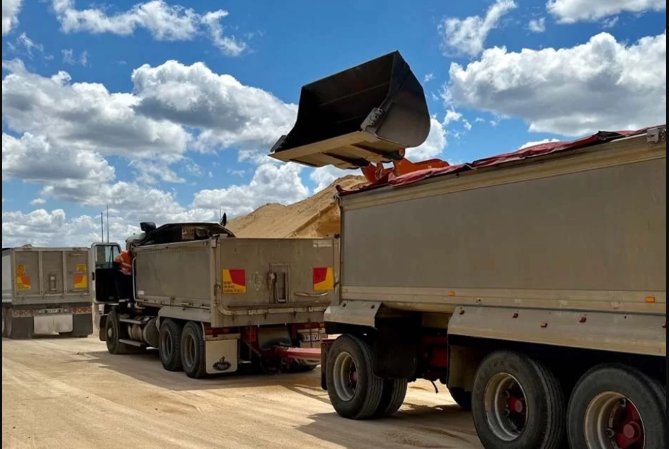
Here’s what makes Multi Minerals Australia different. They’re not just another quarry supplier trying to move whatever material they’ve got stockpiled. They have over 50 years of experience and a quarry in the heart of NSW’s Central West Orana Renewable Energy Zone. They are a genuine partner for renewable developers. Their thermal resistivity product isn’t a generic product. It’s a carefully sourced and tested material designed to meet the specific demands of solar and wind farms.
So, what makes their energy solution stand out?
• Local sourcing: Being located in one of Australia’s most active renewable zones means shorter transport distances, lower costs, and much less carbon emissions from trucking materials halfway across the country. Ther projects stay on schedule, and the environmental footprint stays small. Everyone wins.
• Consistent quality and supply: Large-scale renewable projects need reliable material flows. There’s zero room for “sorry, we ran out.” Multi Minerals Australia’s extensive reserves mean that whether you need a few tonnes for testing or hundreds of truckloads for full deployment, supply is never going to be an issue.
• Customization based on your actual project needs: Not all renewable projects are the same. Some need specific moisture content, particular particle size distributions, or certain compaction characteristics. Multi Minerals Australia works directly with engineers to tailor their thermal resistivity product to match the precise requirements of each installation.
The Science Behind Multi Minerals Australia’s Thermal Resistivity Product
At its core, Multi Minerals Australia’s thermal resistivity product works because of its unique composition. Sandy clay blends strike this perfect balance between structure and conductivity. Pure sand lacks cohesion and can shift around over time. Pure clay can become waterlogged or too dense. But the right blend? It creates a stable, well-draining medium that conducts heat efficiently.
The thermal properties are measured in units called degrees Celsius, metres per watt. Lower values mean better heat dissipation. Multi Minerals Australia’s thermal resistivity product is engineered to achieve low thermal resistivity values, which keep cables within safe operating temperatures even during peak load conditions when everything is operating to capacity.
The Future of Renewable Energy Infrastructure in Australia
The Australian renewable energy industry is booming. The transition to carbon neutrality and energy independence means not only more wind and solar, but also a lot of pressure to get every detail right. The focus during this period of industry growth has shifted from merely maximizing the capacity built to preparing for the long haul with robust and intelligent systems.
Thermal resistivity products will be a key factor in this transformation. It is the kind of basic material that never gets publicity but makes everything else possible. Even the world’s most advanced renewable technology can exhibit poor performance or be subjected to premature failure if it is not provided with this material.
Multi Minerals Australia’s energy solution is clear proof of a genuine pledge to the growth of the Australian market through the provision of sustainable, reliable, and locally sourced materials. It is about constructing infrastructure that will last for decades, consistently perform well, and resonate with the broader environmental objectives that are propelling the whole renewable energy movement forward.
FAQs
What is the application for a thermal resistivity product?
It encases underground power cables used in renewable energy projects, helping dissipate heat and maintain safe operating temperatures so infrastructure performs at optimal levels for many decades.
Why can’t solar and wind farms just use whatever soil is already on site?
Native soils have poor thermal properties and are not used. Non-specialized thermal resistivity products lead to cable overheating, reduced efficiency, and shorter equipment lifespans. It’s just not worth the investment risk of millions of dollars into a project.
Final Thoughts
The need for a thermal resistivity product may not be obvious to those not in the renewable energy industry. It is however, absolutely essential for long-term success for solar and wind farms to deliver reliable, efficient power for decades. The product around underground cables matters just as much as the turbines and panels sitting above ground.
Multi Minerals Australia’s energy solution gives renewable developers access to a sustainable, locally sourced thermal resistivity product that’s been tailored specifically to the unique demands of Australia’s renewable energy sector. It’s about building smarter infrastructure from the ground up, literally from the foundation level, so that everything above it can perform at its absolute best.
Partner with Multi Minerals Australia and lock in the thermal performance your infrastructure needs to succeed for the long haul.
Click For More Insights Click Below:
The Importance of Thermal Resistivity (TR) Products in Solar and Wind Farm Projects
